Spring
Start on reefs for vermilion snapper and amberjack. Watch for migrating cobia and kings as the water warms.
 Shop coastal gear
EIGHT5ZERO / DESTIN, FLORIDA
Past East Pass, the trip splits two ways. Work a reef for snapper and grouper, or follow bait into open water for kings, mahi and tuna.
Typical fishing windows off Destin. Water temperature, current and bait can move the bite several weeks either way.
Start on reefs for vermilion snapper and amberjack. Watch for migrating cobia and kings as the water warms.
Look for mahi and sailfish along current edges. Longer bluewater trips bring yellowfin into play. Red snapper is a favorite reef target.
Try gag grouper and amberjack over structure, or follow bait schools for kings. Cooler fronts bring wahoo into the mix.
Work bottom structure for grouper and snapper. On a suitable offshore weather window, troll deep breaks for wahoo.
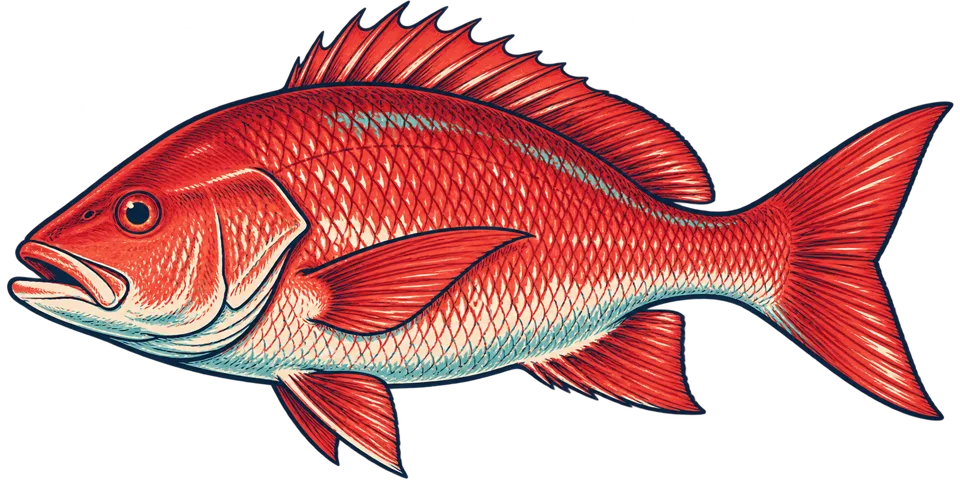 Reefs & wrecks
Present through the year. Summer trips often focus on fish holding above structure. Drop a bait to the depth of the marks.
Use a sliding egg sinker above a swivel, a leader and a circle hook. Tip it with cut bait and stop your drop just above the reef.
Red eyes, a sloping forehead and a deep red body give this reef fish its familiar outline. A juvenile may have a dark spot high on its side that fades as it grows.
Idle across the wreck before setting up. If the sounder shows a band of fish above the steel, start on the upper edge of that band. A bait dropped straight to the bottom can pass the school entirely.
When the line draws tight on a circle hook, reel steadily. If small fish intercept every drop, try a larger bait on the next pass.
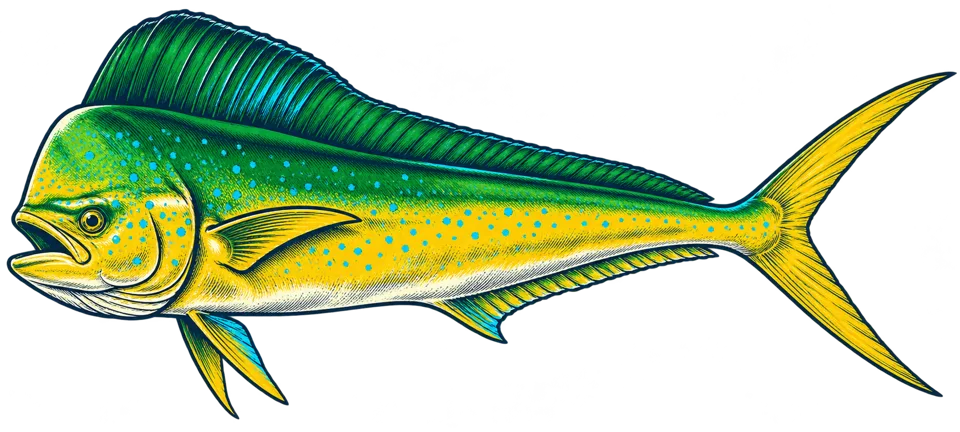 Weed lines
May–August is a useful starting window. Look for bait under floating weed or debris and keep a pitch bait ready.
Keep a spinning outfit ready with a short mono leader and a circle hook. Pitch a live pilchard alongside floating weed.
Look for an almost continuous dorsal fin running from the head toward a deeply forked tail. A mature bull has a steep, squared forehead. A cow has a more rounded profile.
A long weed line is easier to fish in pieces. Begin where two strands meet, a board has collected weed, or flying fish scatter. Cast beside the cover so the bait stays visible.
If mahi follow the boat without taking a lure, switch to a small live bait and give it room to swim. Watch for a second fish behind the first.
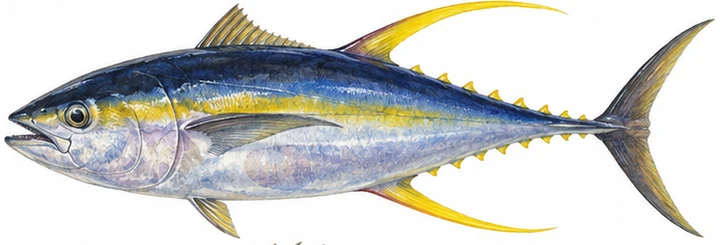 Deep bluewater
A summer option for longer runs. Ask how far the boat can range and whether recent trips have found birds or surface-feeding tuna.
Free-line a live bait on a heavy spinning or conventional outfit with a fluorocarbon leader and circle hook. Let the bait drift naturally with the current.
A thick, streamlined body tapers to a narrow tail base lined with yellow finlets. Large yellowfin can develop long, curved yellow dorsal and anal fins. Color alone is a poor way to distinguish small tunas.
Treat this as a dedicated bluewater run. Once you find feeding birds, watch which way the bait is moving and set up ahead and to one side of the school.
Feed a bait with the drift so it travels with the loose baits. A bait that pulls sideways across the current is a cue to reposition the boat.
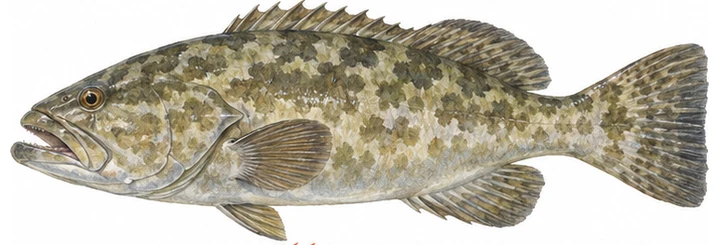 Rock ledges
Spring and fall are good times to investigate hard bottom. Present live bait near the lip of a ledge.
Fish a sliding-sinker rig with a stout abrasion-resistant leader and circle hook. Lower a live pinfish near the ledge and keep it just clear of the rock.
Look for a heavy head, broad tail and irregular dark markings across gray-brown flanks. Gag can resemble black grouper, so examine the pattern and use an identification guide before keeping one.
Trace a ledge until you find a corner or undercut holding bait. Start the drift upcurrent so the rig settles alongside the cover as the boat comes over it.
Keep the rod close and take up slack as soon as the fish commits. The first few turns of the reel matter most while a grouper is close to its hole.
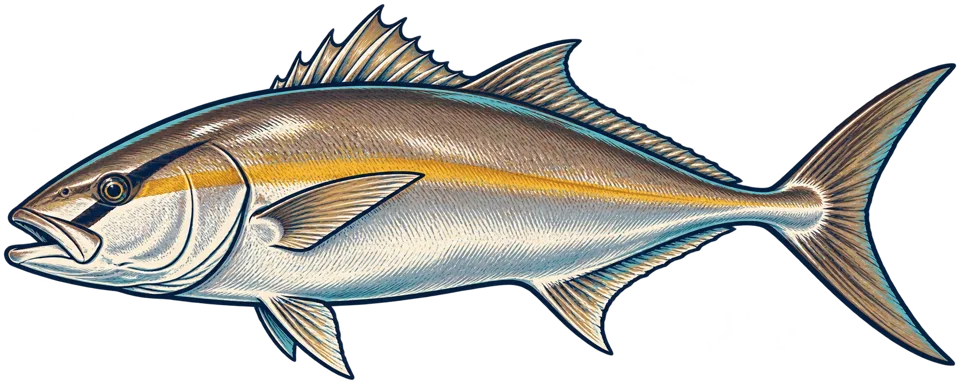 High-relief wrecks
Look in April–May and September–October. Work a vertical jig through marks suspended above the wreck.
Tie a vertical metal jig with an assist hook to a heavy leader. Drop below the school and work the jig upward through the marks.
A greater amberjack has a muscular, bronze-toned body and a dark band that angles from the snout through the eye. Related jacks share similar markings, especially when young.
Make a sounder pass across the highest part of a wreck. Suspended marks give you a starting depth for a jig without putting it into the metal below.
If a jack follows halfway up and drops away, send the jig back beneath it and change the retrieve. Keep track of where the line runs as the boat drifts past the wreck.
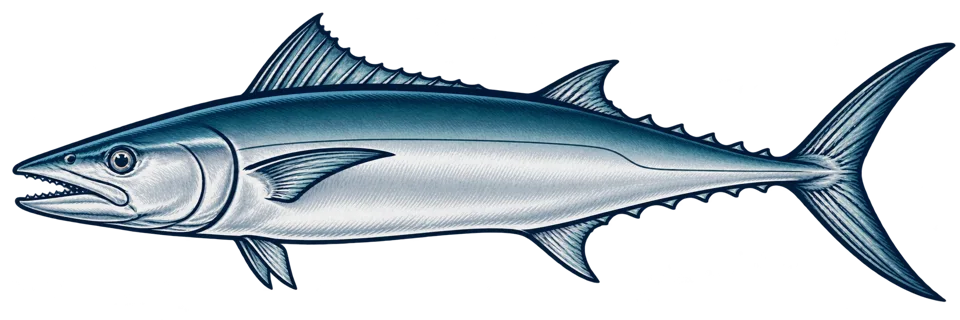 Bait schools
From spring through early fall, slow-troll a live bait around the edges of a school.
Slow-troll a live cigar minnow on a short wire leader with a trailing stinger hook. Keep the bait swimming upright.
A king has a long silver body, a narrow tail base and sharp teeth. Its lateral line bends sharply downward near the second dorsal fin, a useful detail when a spotted juvenile resembles a Spanish mackerel.
Work the outside of a bait school. Watch for showers of minnows and make a wide turn to bring your bait along that edge a second time.
Check a trolled bait beside the boat before letting it back. If it spins, straighten the hook placement or ease the speed until the bait swims on its own.
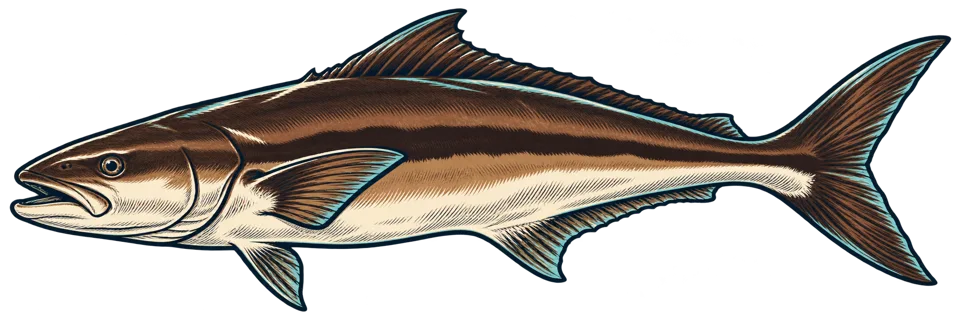 Buoys & wrecks
Watch for spring migrants near the surface. Fish can also hold near offshore structure at other times.
Tie a bucktail jig to an abrasion-resistant leader on a spinning outfit. Cast ahead of a cruising fish and swim the jig across its path.
A flat head, dark lengthwise stripe and broad pectoral fins give a cruising cobia a sharklike silhouette from above. Look for the pale underside as it turns.
Approach a buoy or a ray slowly enough to see what is traveling alongside it. Have a bait ready before the fish passes the bow.
Lead the cobia with the cast. Start the retrieve while the lure is still ahead of it so the fish can follow without turning back toward the boat.
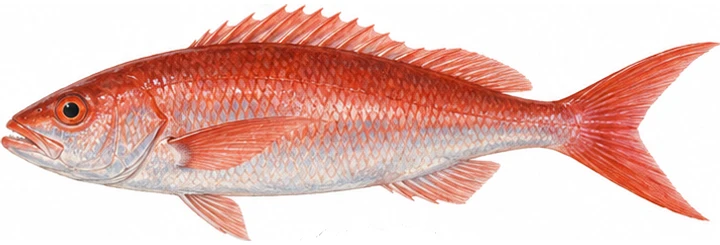 Reef schools
An early-spring reef option. Use small pieces of cut bait and check for schools above the bottom.
Use a dropper rig with a small circle hook above a bank sinker. Bait with a strip of squid and lift the rig to the depth of the school.
This slim red snapper relative has a small mouth, forked tail and delicate gold markings along its sides. Its smaller mouth is a useful clue when deciding how much bait to put on the hook.
Search above the reef for a distinct layer of fish. Lower the rig to the top of the layer first, then test a little deeper on each drift until bites become consistent.
Trim squid into narrow pieces and leave the hook point clear. If the bait comes back pinched off, shorten the strip before changing the whole rig.
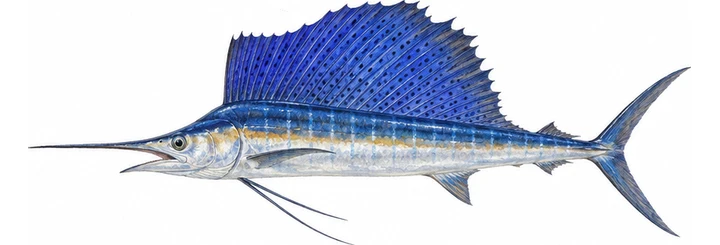 Current seams
June–September offers warm-water opportunities. Watch the clean side of a color change for bait at the surface.
Free-line a live pilchard on a circle hook and mono leader. Drift the bait along the current seam where baitfish gather.
The long bill and sail-shaped dorsal fin are the obvious clues. A folded sail can be hard to see, so look for the slender body and long pelvic fins when a fish approaches the spread.
On a clean-water edge, watch the baits as closely as the horizon. A nervous bait skipping sideways can reveal a sailfish before its dorsal fin breaks the surface.
Keep a live bait swimming freely near the seam. When a fish picks it up, let the line come tight smoothly under the reel's drag.
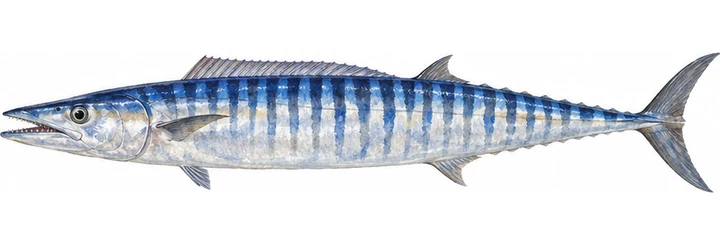 Deep breaks
October–March is a useful planning window. Troll across a break and repeat passes where bait and current meet.
Troll a diving plug rated for your trolling speed on a wire bite leader. Cross the depth break and repeat passes where strikes occur.
Narrow blue bars cross a long silver body with a pointed snout. The markings can fade quickly, so also look at the elongated jaws and sleek profile.
Start where a depth change intersects a current edge. Record the direction of a productive pass as well as its position. The lure may track differently on the return run.
Test the plug beside the boat at trolling speed. If it rolls or breaks the surface in a turn, reset it before making another pass.
On structure. Make a pass over the reef or drop-off before setting a drift. Mark both the bait and the fish, then drop a live pilchard or a flat-fall jig through the depth where they overlap.
In open water. Troll to cover ground. When birds, bait or a strike identify a productive stretch, circle back and slow down to present live whitebait. Around a buoy, keep a bucktail jig ready for a visible cobia.
At first and last light. Dawn and dusk are good windows to watch for surface feeding. During the day, follow the bait deeper if the surface goes quiet.
Fish presence and harvest dates follow different calendars. Check licensing for your private-boat or charter trip, then verify the open season, size and bag limits for your species and waters. Start with Florida’s recreational saltwater regulations and NOAA’s Gulf recreational regulations.
Explore individual profiles for rigs, bait and agency references. Rules in these profiles were reviewed November 21, 2026.
Offshore reefs & wrecks
Local presence: year-round.
Regulations, seasons, rigs & baitCoastal runs, buoys & structure
Local presence: spring through fall.
Regulations, seasons, rigs & baitCoastal & offshore waters; piers
Local presence: late spring through early fall.
Regulations, seasons, rigs & baitOffshore weedlines & floating debris
Local offshore presence: summer.
Regulations, seasons, rigs & baitOffshore wrecks & rocky reefs
Local presence: year-round.
Regulations, seasons, rigs & bait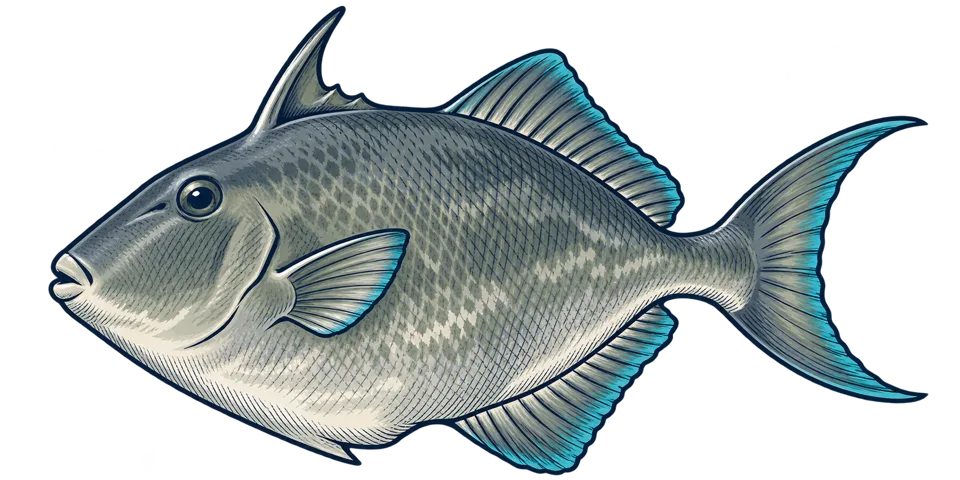
Hard bottom, reefs & ledges
Local presence: year-round.
Regulations, seasons, rigs & bait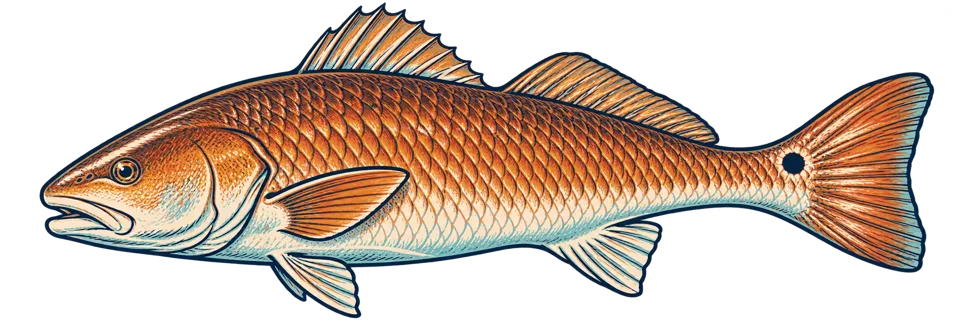
Bays, grass edges & oyster bars
Local presence: year-round.
Regulations, seasons, rigs & baitThese are recreational fishing summaries for Destin and the Florida Panhandle, with state and federal distinctions where listed. They are not a complete rulebook or a live bite forecast.
Each species guide links to its official regulation pages, species profiles and fishing guidance. The site summarizes those sources in its own words.
Explore our current print-on-demand coastal collection or read the story behind EIGHT5ZERO.