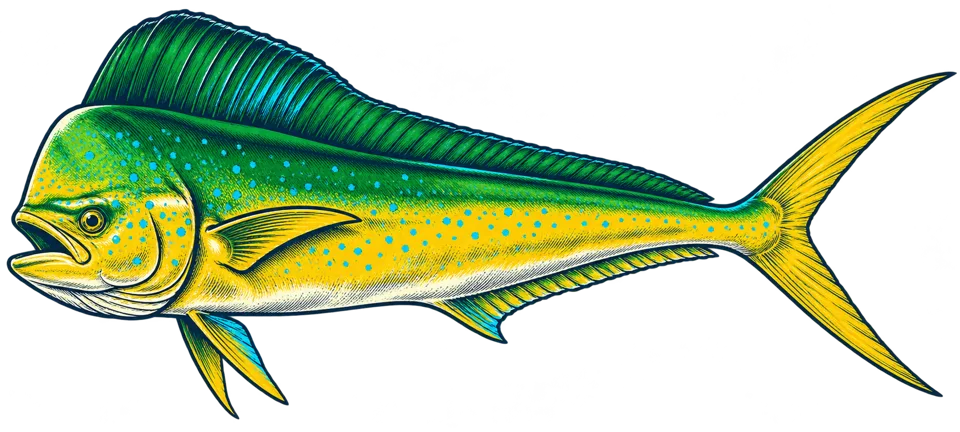
Also called dolphinfish or dorado. FWC describes warm offshore habitat, with young fish living around floating sargassum and adults feeding along offshore weedlines.
Rules reviewed November 21, 2026. Florida Gulf state waters extend 9 nautical miles offshore; federal rules apply beyond. Boat type and landing location can change the rules. Check the official sources before every trip.
KNOW BEFORE YOU KEEP
Regulations
Florida Gulf state waters: no minimum size; 10 fish per person per day, capped at 60 per vessel, whichever allows fewer fish.
Captain and crew may not retain a bag limit. Atlantic-coast limits differ; this is a Gulf state-water summary.
For offshore trips beyond state waters, confirm applicable federal and Florida landing requirements before keeping fish.
Total length: snout to compressed tail tip. Fork length: snout to the center of the tail fork.
FWC describes trolling rigged ballyhoo, or using artificial lures, feathers and spoons. It also describes chumming with cut bait when a school stays near a hooked fish.
Bait box
Rigged ballyhoo and cut bait are fishing options in the FWC profile; squid and small fish are part of the species’ diet.
Broad seasonal bands for Okaloosa and Walton counties. King mackerel: late spring to early fall. Fish presence is not a legal harvest calendar; unhighlighted bands mean the local source does not list that season.
Before heading out, confirm your saltwater license or exemption, the rules at your exact fishing location, and any current closures. Private-boat anglers targeting covered reef fish should also check the State Reef Fish Angler designation requirements.
Florida Gulf state waters: no minimum size; 10 fish per person per day, capped at 60 per vessel, whichever allows fewer fish.
Captain and crew may not retain a bag limit. Atlantic-coast limits differ; this is a Gulf state-water summary.
For offshore trips beyond state waters, confirm applicable federal and Florida landing requirements before keeping fish.
When is mahi harvest open?
No recurring Gulf state-water seasonal closure is listed in the FWC summary. Check for new rules before your trip.
What tackle and bait do the agencies suggest?
FWC describes trolling rigged ballyhoo, or using artificial lures, feathers and spoons. It also describes chumming with cut bait when a school stays near a hooked fish. Rigged ballyhoo and cut bait are fishing options in the FWC profile; squid and small fish are part of the species’ diet.
When are mahi found locally?
Local offshore presence: summer. The cited FWC entries do not prescribe a best hour of the day for this species.